

To effectively prepare for a World of Warcraft raid night, you should focus on several areas. First, make sure your gear is up to date and optimized based on class-specific stat priorities. Utilize tools like Raidbots and Ask Mr. Robot for guidance. Next, manage your consumables strategically, using buff foods, potions, and flasks to enhance performance. Understand specific boss patterns and strategies through guides like Wowhead. Clear communication with your team is crucial, so confirm attendance, roles, and voice communication. Finally, review class mechanics and roles to make sure everyone knows their responsibilities. By following these steps, you’ll be well-prepared for a successful raid night – and continue improving with every run.
Key Takeaways
- Set clear goals for the raid, focusing on achieving specific milestones to direct team effort and minimize downtime.
- Use tools like Raidbots and Ask Mr. Robot to optimize character gearing, as well as consumable management for performance enhancement.
- Prioritize understanding of boss mechanics through guides, PTR testing, and videos to ensure swift adaptation to fight phases.
- Establish clear communication channels, defining roles, and tracking raid composition to ensure a complete team.
- Schedule raid times and maintain consistent progress through weekly maintenance.
Gear Requirements and Upgrades
Before running your first raid, make sure you’re prepared with the necessary equipment, as certain item levels are required for different raid modes, and knowing how to gear up appropriately is crucial for success.
For instance, Aberrus LFR (Raid Finder) can be a great starting point to gain 408 blue gear using Whelpling Crests. Completing all the wings of Aberrus through the Raid Finder can help you build a strong foundation. Subsequently, you can join normal difficulty raids through the Premade Group Finder once you’re confident.
Gear optimization is critical, particularly when choosing between pieces with different stats. For example, some specs prioritize verses over mastery, while others may focus on haste. To optimize your gear effectively, consider your class and spec-specific stat priorities and follow guides from reliable sources like WoWHead and Icy Veins.
Stat prioritization is crucial, especially in PvP settings where gear often has high versatility and item level. By understanding how to prioritize and optimize your gear effectively, you can ensure you’re well-prepared for your first raid.
Consumable Strategy and Management
Effective consumable strategy and management can greatly improve your raid performance by providing additional buffs, protections, and healing. It’s important to familiarize yourself with the various types of consumables and learn when to use them most effectively.
When it comes to analyzing raid performances, understanding consumable usage is pivotal. You should know which buff foods enhance your damage and healing output, and when to consume potions for extra protection.

For example, as a rogue, you can use certain potions to boost your damage output, and as a priest, you can use protection potions to mitigate nature damage during raids.
To maximize the impact of your consumables, you should also manage your flask rotation and cooldowns strategically. This means using a flask right before you engage a boss and then again when your cooldowns are back up.
Proper consumable management will safeguard that you’re optimizing your performance and contributing to the overall success of your raid team.
Understanding Boss Mechanics
Mastering boss mechanics is essential to success in World of Warcraft raids, as they dictate the actions required to avoid damage and execute kills smoothly. Familiarizing yourself with the specific mechanics of each boss is crucial to maneuvering the challenges they pose. This includes positioning strategies to evade attacks, reaction timing to counter abilities, and phase adjustments to adapt your approach. Additionally, be aware of environmental hazards that can impede your progress or offer strategic advantages.
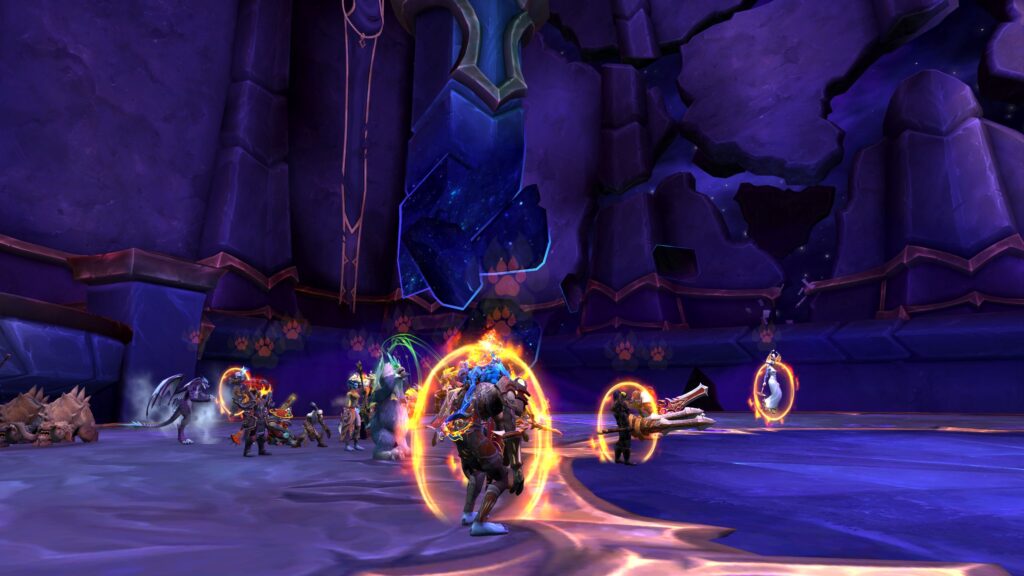
You can start by reviewing raid guides and videos to understand the boss’s patterns, such as learn οnce or certain adds}. These resources explain how to handle specific mechanics, like ‘Oh Look, SPECIAL Adds!’ which require special handling to avoid undesirable outcomes.
Bosses may also employ tactics like ‘Threat Ladder,’ where the threat table needs to be managed carefully, and ‘Yummy Koolaid,’ which involves mind control requiring quick crowd control.
Effective Team Communication
As you prepare for a successful raid night, effective team communication plays an important role in your success.
Start by confirming raid slots for all participants, making sure everyone understands their responsibilities.
Clearly defining roles will help prevent confusion and guarantee each member is working towards the same objectives.
Confirming Raid Slots
When raid night approaches, you must verify your raid slots by making sure that all necessary players have their roles and voice communication set up to prevent delays. Checking attendance and tracking raid composition are vital steps to guarantee a smooth start. Identify any missing slots and explore backup options to avoid last-minute scrambles.
There are several strategies you can use to manage attendance effectively. Establish a clear communication channel, such as a shared document or a dedicated Discord server, where players can indicate their availability for each raid night. This allows you to track attendance and identify potential gaps in your raid composition. Having a list of backup players can be a lifesaver, making sure you have a complete team even when some members are unable to attend.
Think about what elements are essential for your specific raid. Balance your team’s roles, such as healers and DPS. Secure your strongest candidates to fill these roles, and then fill in the remaining slots. Confirming raid slots early guarantees a cohesive and prepared team, setting you up for success when the raid begins. With a well-set structure, you can focus on the fight rather than scrambling to find players.
Defining Roles Clearly
Clearly defining each player’s role in the raid is essential to guarantee clear coordination and effective teamwork during the actual fight. You should make certain that every member knows their specific responsibilities and expectations. This includes designating a raid leader to make critical decisions, assigning strategies to different roles, and deciding which players will handle specific tasks.
When distributing roles, consider the strengths and weaknesses of each player. Assign players to roles that fit their skills and expertise, making sure that everyone knows what’s expected of them. For instance, your healers should focus on keeping the team alive, while your DPS players focus on taking down the boss. Clearly defining these roles helps prevent confusion and ensures everyone works together seamlessly.
To ensure teamwork, make sure your raiders understand their team responsibilities and when to execute specific actions. This includes using specific macros, integrations, and tactics to stay coordinated. Utilize tools like DBM and other hetonic tools to keep everyone informed of key events.
Planning and Executing Raids
Before the actual raid begins, you should familiarize yourself with the new raid’s mechanics and strategies via YouTube guides and participate in PTR testing for valuable hands-on experience. This will help you onboard quickly and avoid spending too much time failing.
Team coordination is pivotal for success, and thorough preparation guarantees that everyone knows their role and responsibilities.
You should also review strategies based on your class and role. Websites like WoWHead and Icy Veins offer detailed guides on class mechanics and ideal rotations.
Making sure your entire team follows these strategies and adheres to set roles and responsibilities will lead to faster progress and fewer wipes.
Scheduling specific raid times and keeping up with weekly maintenance ensures consistent progress.
Managing time during the raid itself by adhering to the agreed strategies, using selected consumables, and keeping a smooth pace also proves essential.
Communication and adaptability are cornerstones of a successful raid team. Familiarize yourself with ADD-ONS like DBM to stay informed and make adjustments on the fly.
Managing Roles and Team Dynamics
To maximize efficiency during raid nights, assign specific roles and responsibilities to team members based on their class and strengths, with clear communication from leadership to guarantee a harmonious and effective team dynamic.
Incomplete teams tend to struggle with coordination and, as a result, the amalgamation of diverse roles is essential. Ensuring each player is doing their part in achieving team cohesion enhances overall performance. This foundational structure is further reinforced through adaptability with shifting strategies as needed. This flexible approach avoids stagnation, helping teams navigate high-pressure battle scenarios.
Leadership dynamics play a significant role in fostering a united front. Effective leaders motivate and guide teammates concisely and structurally, reducing downtime and confusion. This strategic consistency keeps the focus on the battle at hand and subordinate issues that might otherwise hinder progress.
Frequently Asked Questions
What Are the Proper Steps for Confirming Raid Attendance With Guild Leaders?
To confirm raid attendance with your guild leaders effectively, make sure you communicate ahead of time. Let them know if you can make it at least a few days in advance.
If issues arise, notify them immediately, especially if you’re running late or need to miss a raid. This helps avoid scheduling conflicts and guarantees backup players are prepared.
How Early Should I Log in Before a Raid to Ensure a Spot?
When it comes to securing a spot at a WoW raid, early arrival is key. Don’t be a last-minute join hoping for availability. Instead, log in and confirm your attendance with the guild leader or officer a few days before the raid. This secures they know you’re committed and can plan the team accordingly.
Avoid waiting until the last minute, as this can lead to disappointment and a lack of a raid spot.
Can I Join a Raid Late if Other Players Are Unavailable?
When considering joining a raid late, remember that it’s generally frowned upon to join if other players are unavailable. This is part of raid etiquette, ensuring that everyone knows their role and can effectively execute strategies.
If you need to join late, communicate with your group beforehand to avoid disrupting the strategy and other players.
Is It Appropriate to Prioritize Solo Gearing Over Team Gearing?
Prioritize your gameplay style when deciding between solo and team gearing.
If you enjoy casual activities like questing and crafting, focus on solo gearing, as it allows for self-improvement without the pressure of group content.
However, for high-end gear and faster progress, team gearing through raids and mythic dungeons is generally more efficient.
What Are the Expectations for DPS Performance in Normal Raids?
Regarding DPS expectations in normal raids, you should aim to hit certain benchmarks. For instance, Gnarlroot requires 85k, Iriga needs 65k, and Volcoross requires 70k.
These expectations can be adjusted based on your gear quality and class-specific abilities. Familiarize yourself with raid mechanics and positioning to optimize your performance.
Proper preparation will help you meet these DPS standards and improve your raid’s overall efficiency.
Conclusion
To conclude, to get the most from your WoW raid night, prioritize preparation. Confirm gear requirements are met, select the best consumables, and review boss mechanics.
Communicate effectively with your team, plan and execute raids strategically, and manage roles and team dynamics.
By following these practices, you’ll be ready to tackle even the toughest raid encounters.